
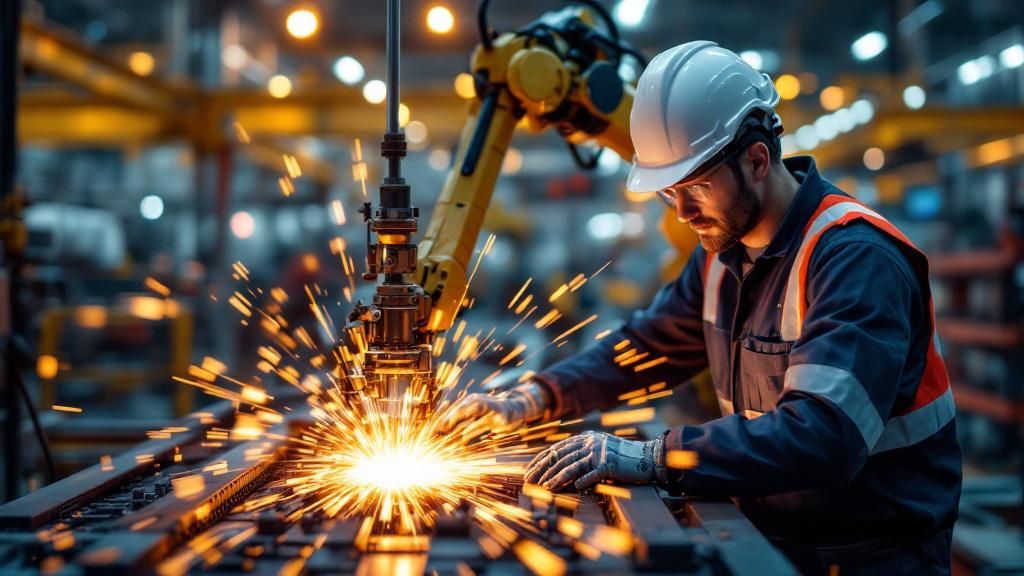
The UK manufacturing sector is experiencing an significant shift as manufacturing executives pledge significant funding in advanced automation systems and extensive skills training initiatives. This deliberate repositioning reflects manufacturers’ commitment to enhance productivity, maintain their competitive edge, and ensure sustainable growth. Our research demonstrates the substantial financial commitments fuelling this manufacturing transformation, examines the innovative technologies revolutionising factory floors, and investigates how manufacturers are equipping their employees for future requirements. Discover what this investment surge means for the UK manufacturing sector’s future.
Rapid Growth in Automated Systems
The UK manufacturing sector has witnessed an remarkable investment towards automated systems, with investments reaching record highs in recent years. Major manufacturers across automotive, aerospace, and electronics markets are committing significant funds towards automation robots, AI technology, and cutting-edge production methods. This investment surge demonstrates industry confidence in automation’s ability to improve production efficiency, reduce production costs, and raise quality benchmarks. The scale of this commitment highlights industry recognition that technological progress is essential for sustaining competitive edge in an ever more globalised marketplace.
Industry experts attribute this capital flow to several converging factors, encompassing post-pandemic distribution network evaluation, escalating wage expenses, and the urgent imperative for greater manufacturing agility. Companies are emphasising automation systems that deliver versatility and expandability, allowing rapid adaptation to variable consumer requirements. Investment data demonstrate that manufacturers are doing far more than updating manual operations but comprehensively restructuring manufacturing approaches. This planned method guarantees that British manufacturing stays at the vanguard of industrial innovation, positioning the sector for sustainable growth and enhanced resilience against forthcoming financial volatility.
Strategic Workforce Development Initiatives
Understanding that technological advancement alone cannot drive success, UK manufacturers are committing significant resources in comprehensive workforce development programmes. These initiatives constitute a fundamental shift in how the industry invests in human capital. By combining technological adoption with comprehensive training programmes, manufacturers are ensuring their workforce can successfully run, service, and enhance new technologies. This integrated methodology resolves competency deficiencies whilst fostering staff morale and participation in an increasingly automated environment.
Skills Training Programmes
Leading manufacturers have created custom training centres and apprenticeship programmes created to furnish workers with essential digital and technical competencies. These programmes cover robotics management, data analysis, cyber security protection, and sophisticated coding languages. Funding for tutor-delivered and web-based training systems provides accessibility across all workforce levels. Companies are working alongside learning organisations to provide qualifications recognised across the industry, boosting career progression opportunities and staff retention levels substantially.
The financial outlay to workforce development goes further than onboarding phase, with companies establishing ongoing capability enhancement programmes. Workers receive consistent training prospects to keep pace with evolving technological landscapes and emerging industry requirements. Many employers offer training subsidies, coaching initiatives, and study leave for further education. This sustained investment reflects manufacturers’ focus on building enduring professional routes and building a culture of lifelong learning within their companies.
Collaboration with Educational Institutions
UK manufacturers are establishing collaborative relationships with universities and higher education institutions to synchronise course design with sector needs. These collaborations ensure graduates possess practical skills immediately applicable to contemporary production settings. Collaborative initiatives include course development, guest lecturing, laboratory access, and equipment provision. By engaging directly with academic organisations, manufacturers influence the pipeline of talent entering the sector, addressing anticipated skills shortages in advance.
Additionally, manufacturers sponsor research programmes and innovation centres within academic institutions, fostering knowledge exchange and technological progress. Combined-degree programmes and industry placements offer students with invaluable real-world experience whilst providing companies early access to new talent. These collaborations strengthen the UK’s status as a global manufacturing hub, ensuring ongoing competitiveness and establishing Britain as an desirable location for advanced manufacturing investment and skilled workforce development.
Economic Impact and Prospects Ahead
The record investment in automation and skills training is expected to deliver considerable financial gains across the UK industrial base. Industry analysts expect output increases of up to 25% within the next three years, leading to higher production and enhanced competitiveness in worldwide markets. These developments are projected to create approximately 15,000 fresh skilled manufacturing roles whilst bolstering Britain’s standing as a technology-driven industrial hub. The cascading impact of this capital injection will likely drive expansion throughout supply chains and supporting sectors.
Long-term prospects for UK manufacturing appear decidedly encouraging as businesses position themselves at the leading edge of Industry 4.0 adoption. Companies deploying automation today are preparing themselves to unlock new market possibilities and respond swiftly to evolving consumer demands. The integration of artificial intelligence, robotics, and cutting-edge analytics promises to unleash transformative possibilities previously constrained by labour availability and practical restrictions. Forward-thinking manufacturers recognise that sustained competitiveness depends upon ongoing technological development and staff capability building.
Looking forward, the drive created through existing investment patterns points to a substantial transformation of British manufacturing’s economic role. Public funding through workforce development funding and commercial incentives will potentially increase uptake across smaller businesses. As automation develops and workforce skills grow, UK manufacturers are well-positioned to regain market share from global rivals. This shift represents not just industrial upgrade but a strategic realignment of manufacturing as a foundation of Britain’s future economic prosperity and technological leadership.
